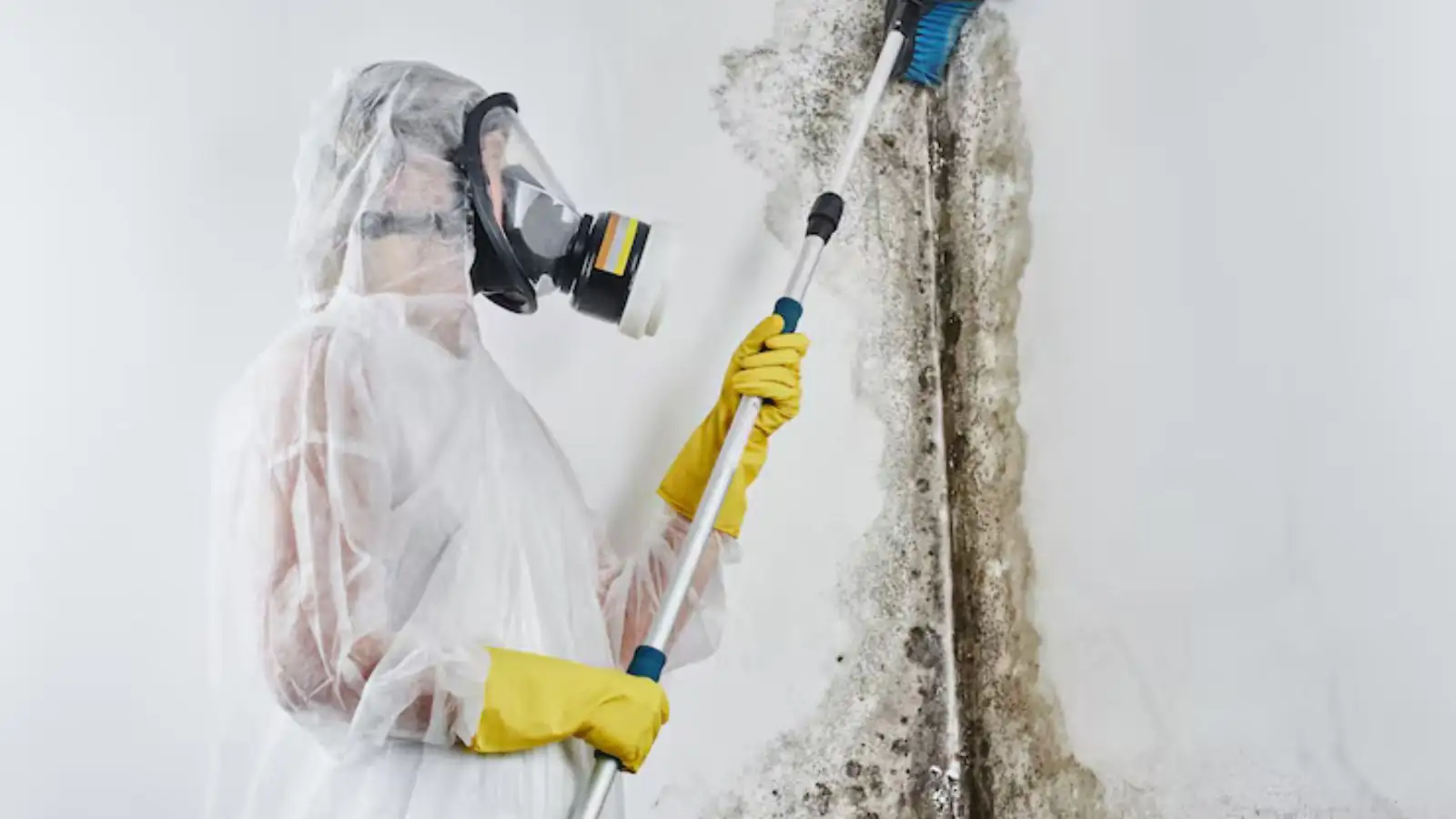
Mold Remediation Means Containing, Removing and Cleaning, Then Fixing the Water
Mold remediation is the controlled removal and cleaning of mold growth from a home, along with finding the moisture that fed it. Crews seal off the area with containment barriers, remove materials that cannot be cleaned and clean what stays using HEPA vacuums and air scrubbers. Our licensed and insured crews serve Pico Rivera, California, and we follow the approach laid out in the ANSI/IICRC S520 standard, which is the document to ask any company about.
I See Dark Spots or Smell Something Musty and Do Not Know Who to Call
That is a common place to start. A musty smell, a stain that keeps spreading or a patch of dark growth on a ceiling or wall usually means moisture is sitting somewhere. Describe what you see, and we will help you work out whether you need mold remediation, drying, a plumber, a roofer or an independent tester first.
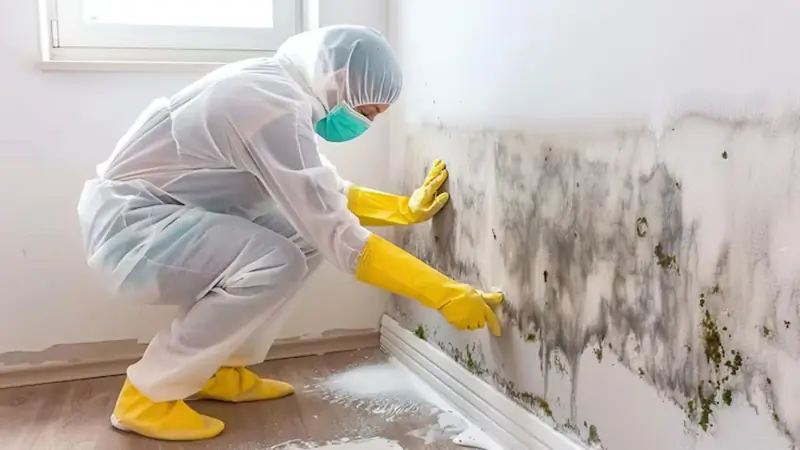
Mold Removal and Black Mold Cleanup
Mold removal is more than wiping a wall. Mold that has grown into drywall, insulation, carpet or wood trim is usually cut out and bagged, because a porous surface cannot be reliably cleaned once it is colonized. Solid framing is cleaned with HEPA vacuums and damp wiping, and sanded or abrasive-cleaned when the surface allows.
Black mold is a name people use for dark growth, and color alone does not tell you what species you have or how serious it is. We treat dark growth the same careful way as any other. The area is isolated with plastic containment, negative air machines keep dust moving toward filters and not into the rest of the house, and workers wear protective gear.
Bleach and household sprays tend to disappoint on porous material, and scrubbing dry mold can spread spores through the house. If the patch is small and on a hard surface, it may be a cleaning job. If it is larger than a few square feet or came from a leak, get it assessed before you disturb it.
Questions about how mold may affect anyone in your home belong with a physician.
Describe the damage to a live dispatcher and get a clear next step.
☎ Call (562) 271-5850Mold After Water Damage
Mold often follows water damage, because wet drywall, carpet pad and framing give it what it needs. The longer wet material sits, the more it can spoil, which is why drying matters so much. Quick water mitigation is the best way to reduce the chance that a leak turns into a mold problem.
If mold is already present, the first fix is still the water source. Remediation done while a pipe, roof or drain keeps leaking is wasted effort, because the moisture feeds the growth again. Crews dry the structure with air movers and LGR dehumidifiers alongside the mold work, and they confirm readings with a moisture meter before anything is rebuilt.
No company can promise that mold will never return. What a good job does is remove the growth, find and fix the moisture, and leave the structure dry. After that, water damage repair puts walls and floors back together.
Common Hidden Sources We See
Mold does not always sit where the leak started. These are the places water tends to hide:
- Upstairs toilet leak into a finished ceiling: a slow seep from a wax ring or supply line soaks the drywall below and the insulation above before a stain even shows.
- AC condensate line: a clogged or cracked drain line drips into an attic, closet or wall near the air handler.
- Roof or siding leak into a closet: water runs down inside the wall and wets clothes shelves, baseboards and carpet along the closet floor.
- Bathroom with poor ventilation: steam with nowhere to go lands on the ceiling and walls, and a fan that does not vent outside never solves it.
In each case, the repair of the source comes first, whether that is a plumber, an HVAC technician, a roofer or a new fan. Then the damp material can be tested, removed and dried.
Inspection, Testing and Independent Clearance Testing
These three steps are often confused, so here is what each one is. An inspection is a visual and moisture check. Someone looks for growth, uses a moisture meter and a thermal imaging camera to find wet areas, and traces the water back to a source.
Testing means taking samples, such as air or surface samples, and sending them to a lab. Results show what was collected on that day in that spot, and they need an expert to interpret them. They do not diagnose anything and they are not a pass or fail on their own.
Clearance testing happens after remediation. A separate tester checks that the area is visibly clean and may sample the air to compare it with the outside or with an unaffected room.
That tester should be independent of the remediation company. A company that tests its own work has a conflict of interest, and a separate party gives you a neutral check. We cannot promise any result, but we can work with your tester and answer their questions.
Ask whether the testing and remediation follow the ANSI/IICRC S520 standard, and ask for the written scope before anyone starts.
How a Remediation Job Runs
A typical job moves in a clear order. The crew finds and confirms the moisture source, sets containment barriers and starts negative air with HEPA air scrubbers. Contaminated drywall, insulation and flooring are removed, and the framing is cleaned.
Then the area is dried and re-checked with a moisture meter. Anything that needs rebuilding waits until readings are dry. If the damage involved flooding or contaminated water, our flood damage restoration team handles the water side first.
Pico Rivera Water Sources and Mold Risk
Pico Rivera sits between the Rio Hondo and the San Gabriel River, and the city plan lists a few areas with localized flooding and weak drainage. If water has come in from the yard or garage after heavy rain, check the FEMA Flood Map Service Center for your address, and look at the base of garage-level walls and any lower rooms for damp spots.
Your water provider can help too. Look at your bill to see whether the City of Pico Rivera Water Division or Pico Water District serves you. If your meter spins while every tap is off, call them, because that points to a hidden leak.
Choosing Between Cleaning, Remediation and Rebuilding
The right response depends on how much material is affected and what is under it. This table shows the usual decision path.
| What you find | Likely next step | Why | Who is involved |
|---|---|---|---|
| Small spot on a hard, sealed surface | Careful cleaning | Nothing porous is affected | Homeowner or a cleaning pro |
| Growth on drywall or ceiling from a leak | Containment and removal | Porous material is usually cut out | Remediation crew |
| Musty smell, nothing visible | Moisture inspection | Hidden water may be behind the surface | Inspector or restoration crew |
| Large area or repeated growth | Full remediation plan | Source and scope must be mapped first | Remediation crew and tester |
| Work finished, need proof | Independent clearance test | Neutral party checks the result | Independent tester |
Insurance and Mold
Sudden and accidental water damage is often covered, while gradual leaks and neglect often are not, and many policies limit mold coverage. Check your policy and ask your insurer exactly what applies. Take photos, keep a record of all repair and cleanup costs and note every conversation with the insurer in a claim diary.
Make temporary repairs that prevent further damage, but hold off on permanent repairs until the adjuster has seen the damage.
What Drives the Cost of Mold Remediation
Mold work cannot be priced fairly from a photo or a phone call. These are the factors that set it:
- Water category: contaminated water adds cleaning and removal steps.
- Affected area: the square footage of growth and the number of rooms involved.
- Materials involved: drywall and insulation come out, while framing is cleaned, and each has a different labor load.
- Drying days and equipment: air scrubbers, negative air and dehumidifiers running over several days add up.
- Rebuild scope: removal leaves open walls, and repair is separate work.
An assessment means a visit with moisture meters and a thermal camera, photos of what is affected and a written scope. A price only makes sense after someone sees the loss and maps the growth. Scope and price are explained before work starts.
Serving Pico Rivera and Nearby Towns
We work from Pico Rivera and also serve neighbors such as Whittier and Downey. Call the dispatch line, describe what you see and we will tell you what we would check first.
Frequently asked questions
Find and stop the water first, whether it is a pipe, a roof or an AC line. Then have the area checked with a moisture meter before painting. A stain with a smell usually means the material behind it is wet, so it should be opened and assessed.
It can give a seller or buyer a neutral document showing what an independent tester found after the work. Whether it satisfies a particular lender or buyer is up to them, and we cannot speak for any lender. Ask the lender or agent what they require in writing.
A separate tester has no stake in whether the work passes. That makes the result more trustworthy to you, a buyer or a lender. The tester sets the criteria and checks the area, and the remediation company fixes anything that falls short.
Bleach can lighten stains on hard surfaces, but it does not solve mold in porous material like drywall or wood, and it does not fix the moisture. Scrubbing dry growth can also spread it. Ask a professional before disturbing a large patch.
No. Many jobs start with a visual and moisture inspection, and testing is added when the question is unclear or when documentation matters. Sampling results need expert interpretation and are not a diagnosis.
No one can promise it will never return. Mold needs moisture, so the best protection is fixing the water source, drying the structure and watching humidity. If the leak or the condensation continues, growth can start again.
Ask whether the company works to ANSI/IICRC S520, the published industry standard for mold remediation. Ask for the written scope, how the work area will be contained and how the area will be checked after work is done.
Signs include a musty smell, paint that bubbles, warped baseboards and stains that return after painting. A moisture meter and a thermal imaging camera can find damp spots without opening the wall, and we can do that inspection.
Water on the floor right now? The dispatch line is open 24/7.
☎ Call (562) 271-5850