Emergency Water Removal Starts With the Source
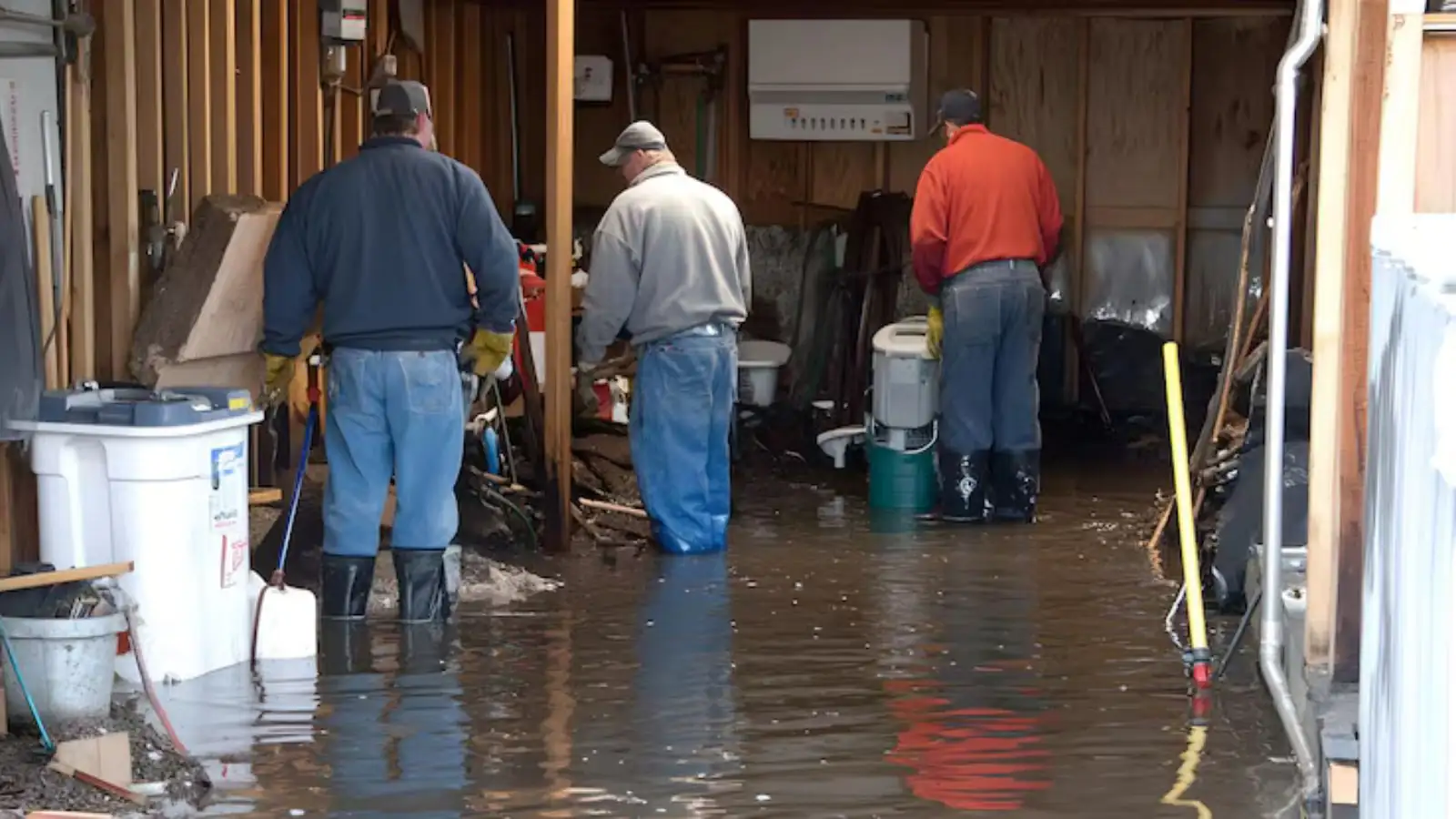
Emergency water removal means pumping and extracting standing water from a home before it soaks further into floors and walls. If water is pooling now, the 24/7 dispatch line is open. Find the shut-off and close it, because pumps cannot keep up with a line that is still running.
Then cut power to the wet area only if the panel is dry and safe to reach. Move valuables up off the floor, and keep children and pets out of the water until the electrical question is settled.
When Standing Water Is an Emergency
Water that covers the floor, runs under baseboards or drips through a ceiling is an emergency. So is any amount that is rising, or that came from a drain or toilet. A shallow film on tile can wait a few minutes while you shut things off. Pooled water on carpet cannot wait long, because the pad underneath acts like a sponge.
After-hours calls are common for extraction work. A failed hose at night is a failed hose at night, and we take those calls on the same 24/7 line, with same-day response when available.
Electrical and Gas Safety Before You Touch Anything
Water and electricity do not mix, and a flooded room can hide live current in outlets, cords and appliances. Safety comes before saving belongings.
- Do not step into standing water if outlets, cords or appliances are submerged or sparking.
- Switch off power at the panel only if the panel is dry and you can reach it without crossing water.
- If the panel is wet or you are unsure, stay out and call the electric utility or 911 before calling the restoration line.
- If you smell gas, leave the house, then call the gas utility or 911 from outside.
- Never run a wet vacuum from a cord that lies in water, and do not use space heaters near wet floors.
Describe the damage to a live dispatcher and get a clear next step.
☎ Call (562) 271-5850How Water Is Pulled Out
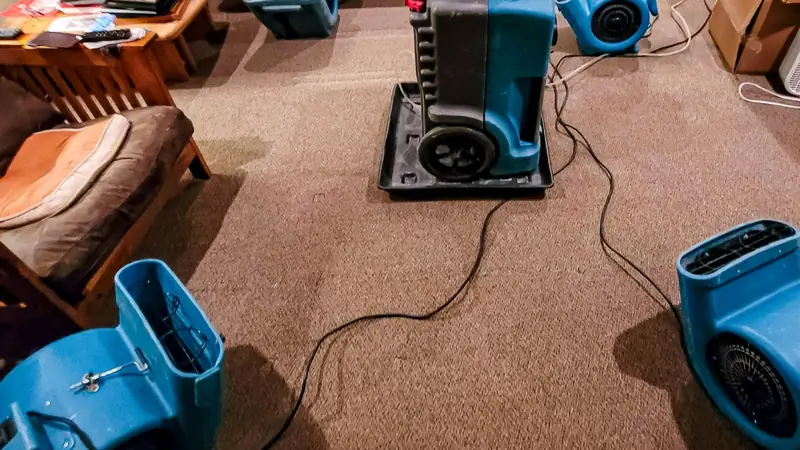
The tool depends on how deep the water is and what it sits on. Deep water goes out first with submersible pumps and hoses run to a drain or the street side. Water left in carpet and pad is lifted with extraction units, which use strong suction through a wand to draw water out of fibers.
Hard floors are cleared with squeegee tools and wet vacuums. Once the bulk water is gone, the crew checks the walls and subfloor with moisture meters and thermal imaging cameras. Extraction removes liquid water, but the water already inside materials needs drying equipment afterward.
Burst Pipe Water Damage
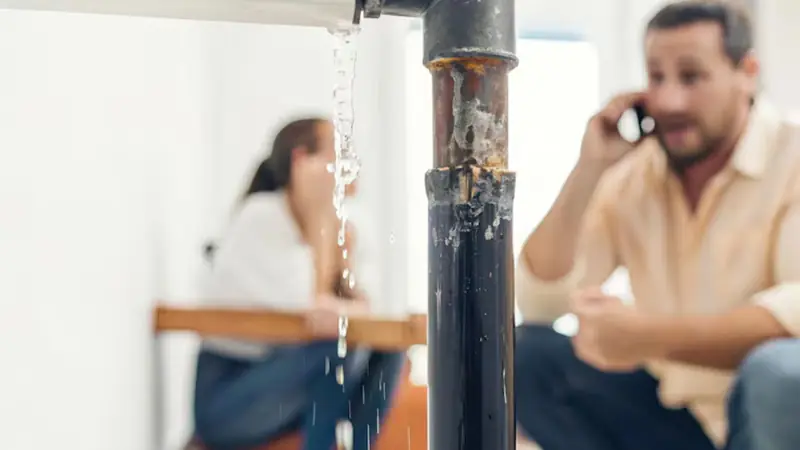
Burst pipe losses fall into a few patterns. A line under a sink splits and fills the cabinet, then spreads into the kitchen floor. A washer supply hose or valve fails behind the machine and runs for hours before anyone notices. A water heater leaks from its tank or fittings and spreads from the closet or garage.
Shut off first, in this order. Close the valve at the fixture if there is one, then the main water valve for the house, and if it is a water heater, switch off its power or gas control. Check your bill to see whether the City of Pico Rivera Water Division or Pico Water District serves you, since that tells you who handles a leak on the street side of the meter.
Extraction comes before drying because drying equipment works on moisture held in materials, not on a puddle. Fans blowing over standing water push moisture into the air and into nearby rooms. Pump the water out, then set air movers and LGR dehumidifiers on what remains. A plumber then repairs the failed line, and permit rules for plumbing work are worth checking with the city Building Division.
If Your Home Has a Crawl Space or Lower Level
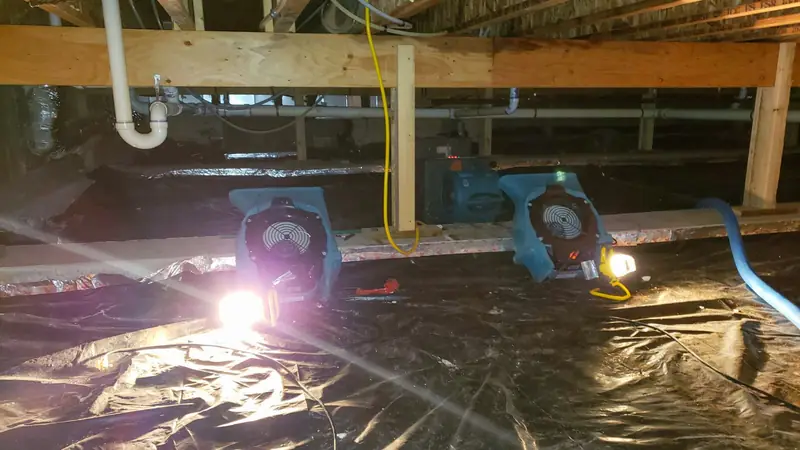
If your home has a crawl space, a garage-level room or a lower level, water from a failed supply line can drain there and sit unseen. Listen for a hiss, watch your water meter with every tap off, and look for dripping from the floor above. Do not enter a flooded crawl space yourself, because of electrical lines and slippery footing. Tell the dispatcher what you found, and the crew will bring pumps sized for the space.
Decision Framework: Which Removal Method Fits
| Situation | Equipment used | Why it fits |
|---|---|---|
| Deep standing water in a room or garage | Submersible pump and hose | Moves large volume fast, so the floor is exposed for the next step |
| Soaked carpet and pad | Extraction unit with wand | Draws water from fibers, and the pad is often lifted or removed |
| Water on tile, vinyl or sealed hardwood | Wet vacuum and squeegee tools | Clears the surface, then the subfloor is checked for water underneath |
| Water in a wall cavity or cabinet base | Small extraction tools, then drying setup | Liquid is removed where reachable and the rest is dried in place |
If the water came from a toilet, a sewer line or outdoors, treat it as contaminated and keep out. That situation calls for a different plan and is covered on our flood damage page.
Water Removal and Your Insurance
A sudden pipe or hose failure is often covered by homeowners policies, while a slow leak that went on for months often is not. Take photos of the water and the source before anything is moved, and save every receipt. Temporary steps that prevent more damage are expected, but hold off on permanent repairs until the adjuster has seen the loss.
What Drives the Cost of Water Removal
Cost depends on the job in front of the crew. Five things shape it.
- Water category, which sets disposal and safety requirements
- Depth and spread of the water, and how many rooms it reached
- Materials that must be lifted, such as carpet pad, laminate or baseboard
- How long pumps and extraction units must run, plus the drying that follows
- Rebuild scope once the area is clear
The real number comes after someone sees the loss, and scope and price are explained before work starts.
Standards worth asking about
The published ANSI/IICRC S500 standard covers professional water damage restoration, including how water is sorted by category and how drying is verified with moisture readings. When you compare companies for extraction work, ask whether crews work to S500 and how they will prove the structure is dry before walls are closed.
Pumps on the Way, Crews Across Pico Rivera
Licensed and insured crews cover Pico Rivera, including the Whittier Boulevard corridor and neighborhoods near Rosemead Boulevard. For nearby losses, we also serve Montebello and Santa Fe Springs. When the water is out, water mitigation handles the drying and moisture mapping, and water damage cleanup deals with affected belongings and surfaces.
Frequently asked questions
Yes. Dispatch runs 24/7, so night, weekend and holiday calls get the same attention as weekday ones. We offer same-day response when available and never promise an arrival time. While you wait, shut off the water, stay clear of outlets and keep valuables off the floor.
Close the fixture valve if one is nearby, then the main water valve for the house. For a water heater, also turn off its power or gas control. If water has reached outlets or the panel, do not touch them and call the utility or 911 first.
Drying equipment works on moisture held in materials. Running fans over standing water just moves moisture through the house. Extraction takes the bulk of the water out, and then air movers and dehumidifiers handle the rest.
Extraction units pull water from carpet fibers and pad with far more suction and a wide wand, and they empty into a large tank or out through a hose. A household wet vacuum works for puddles on hard floors but takes much longer on soaked carpet.
Sometimes. Carpet from clean water can often be extracted and dried in place, though the pad underneath is frequently removed. Contaminated water or water that sat too long usually means the carpet goes.
Yes, if you cannot find the source or the floor stays wet. A small visible puddle can mean a larger wet area under flooring or inside a wall. A meter reading tells you whether the water stopped at the surface.
Often yes when the break was sudden and accidental, but gradual leaks and neglect are often excluded. Check your policy and ask your insurer, and keep photos and receipts. We do not promise approval or payout.
Water on the floor right now? The dispatch line is open 24/7.
☎ Call (562) 271-5850