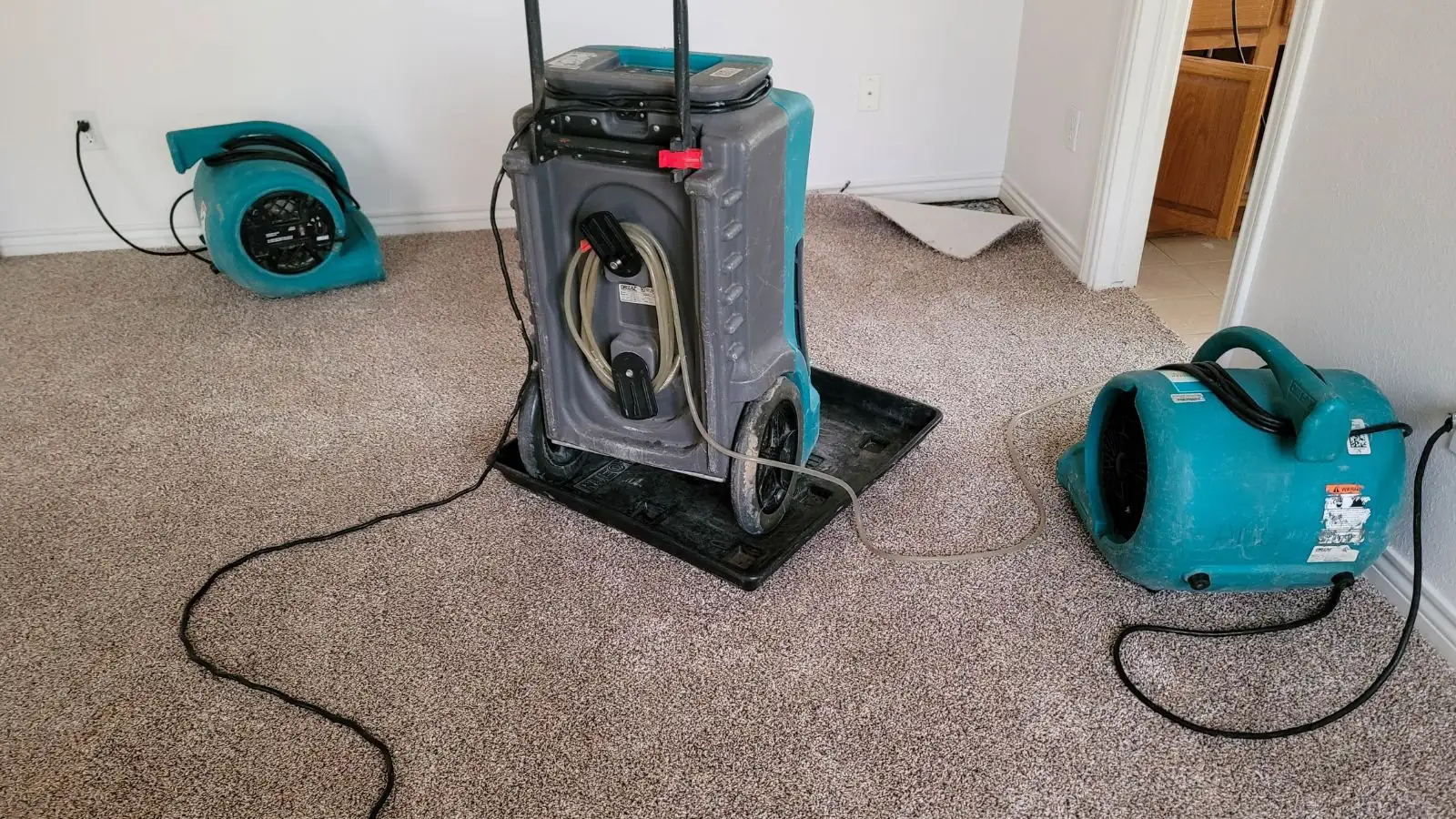
A water mitigation company stops water damage from spreading by removing the water, drying the structure and documenting what happened. It is the emergency phase of the job, and it comes before any rebuilding. If you are comparing providers, this is the work a water mitigation crew should walk you through.
Below is the sequence on a typical job, written so you know what to expect and what to ask. Details change with the size of the loss and the type of water.
Step 1: The call and the first assessment
The first conversation is about safety and the source. The dispatcher asks what happened, whether the water is still running, whether power or sewage is involved and what you can safely do while you wait. Close the main valve if a pipe broke, and stay out of rooms where water meets electricity.
On site, the technician walks every affected room, looks for the source and checks the water category. Clean, gray and contaminated water are handled differently, so this early decision shapes the plan. You should get a plain explanation of what the crew sees before any equipment is set.
Step 2: Moisture mapping
Water travels farther than it looks. Moisture meters read dampness in walls, floors and baseboards, and thermal imaging cameras show cooler, wet patches behind surfaces. The crew marks affected areas and records readings so later visits can be compared against the first.
Mapping decides the scope. It shows which materials can be dried in place and which are too wet or too contaminated to keep. It also gives you a record of how far the water spread.
Describe the damage to a live dispatcher and get a clear next step.
☎ Call (562) 271-5850Step 3: Extraction
Standing water goes first. Extraction units and pumps clear the floor, and wands pull water from carpet and pad. Removing bulk water mechanically is far faster than letting it evaporate.
Materials that cannot be saved come out at this stage. That can include soaked pad, wet insulation or drywall that has wicked water upward. Removing them early gives air a path into wall cavities and lowers the drying load.
Step 4: Drying with air movers and LGR dehumidifiers
Drying is a system, not a single machine. Air movers push air across wet surfaces so moisture leaves the material. LGR dehumidifiers pull that moisture out of the air so it does not settle back onto walls and floors.
Air movers
Compact blowers placed at angles along walls and over floors. They speed evaporation from surfaces and open cavities.
LGR dehumidifiers
Low grain refrigerant units that remove moisture from the air. They keep humidity in the room low so drying keeps moving.
Specialty tools
Injection drying systems, drying mats and HEPA air scrubbers may be added when the building or the water type calls for them.
People often ask whether they can rent this equipment themselves. Equipment placement and monitoring are the hard parts, and household fans and a store dehumidifier rarely match a plan built from moisture readings.
Step 5: Monitoring visits
A good job includes return visits. The technician checks readings, adjusts equipment and decides whether any material needs to come out after all. Drying takes days, and the meters tell the story, not the calendar.
Equipment comes out when readings reach the dry standard set at the start. If a company removes equipment without showing you numbers, ask to see them.
Step 6: Documentation
Photos, moisture readings, equipment logs and a written scope make up the paper trail. Those records show what was done and why, and they help if you file a claim. Keep your own photos too, along with receipts and a claim diary of every call.
Do not make permanent repairs until your adjuster has seen the damage. Mitigation is temporary work meant to prevent further damage, so it fits what insurers generally expect before rebuilding starts.
Mitigation, restoration and repair: what is the difference?
These words get mixed up, and the mix-up can cause confusion over quotes. The table separates them by purpose, so you can see which phase a quote covers.
| Phase | Purpose | Typical work |
|---|---|---|
| Mitigation | Stop damage from spreading | Extraction, moisture mapping, drying equipment, removal of unsalvageable materials |
| Restoration | Return the space to usable condition | Cleaning, sanitizing, drying to standard, content handling and some rebuild planning |
| Repair | Rebuild what was removed | New drywall, insulation, flooring, paint and trim |
One company can do all three, and the rebuild phase is covered under water damage repair. Either way, the scope and price for each should appear separately. That makes it easier to compare bids and to review the work with your insurer.
What to ask before you hire
- Do your crews work to ANSI/IICRC S500, the published standard for water damage restoration?
- Will you map moisture and share the readings with me?
- What equipment will be used, and how will you monitor it?
- How is the scope and price explained before work starts?
- Which parts of this quote are mitigation and which are rebuilding?
- Will I receive photos and drying logs?
A company that answers these plainly is easier to trust than one that rushes you toward a signature.
Cost and insurance, kept general
Mitigation pricing reflects the water category, the reach of the loss, the materials involved and the equipment days. No honest number exists until someone sees the loss, and scope and price are explained before work starts.
Sudden and accidental water damage is often covered by homeowners policies, while gradual leaks and neglect often are not. Flood usually needs separate flood coverage. Check your policy and ask your insurer. Crews serving Pico Rivera also respond for water damage restoration in Downey and Santa Fe Springs.
Pico Rivera note: when the work needs a city permit
The city Building Division handles building permits in Pico Rivera. Electrical or plumbing work almost always needs one, and interior demolition or structural changes likely do too. Non-structural cosmetic changes usually do not. Before your crew cuts into walls or touches plumbing, ask who is responsible for permits.
Permit rules vary, so ask the Building Division about anything that does not fit those categories. The city also says express residential plumbing permits require an active California contractor license and a City business license. Ask any plumbing contractor for those details before you sign.
Frequently asked questions
Mitigation is the emergency phase that stops the damage from spreading, with extraction, drying and removal of unsalvageable materials. Restoration returns the space to usable condition, including cleaning and rebuild planning. Many companies do both, but scope and price should be separate.
Extraction happens quickly, but drying takes days. The duration depends on the water category, the materials, the area affected and the equipment used. Monitoring visits track moisture readings, and equipment is removed once materials reach the dry standard.
Often not, but it depends on the water type and the scope. Sewage or contaminated water may require you to stay out of affected rooms. Air movers and dehumidifiers are loud, so some households prefer to stay elsewhere while they run.
You can try for a small, clean-water spill. The challenge is knowing where to place equipment and when materials are dry. Without moisture readings, wet material can be left behind walls, which is where problems tend to start.
Some do, and some hand off to a contractor. Either way, ask for mitigation and rebuilding to be scoped separately. That keeps your options open and makes the paperwork clearer if you file a claim.
Drying and extraction usually do not involve permits. Electrical or plumbing work almost always does, and interior demolition or structural changes likely do. Permit rules vary, so ask the city Building Division before the work begins.
Water on the floor right now? The dispatch line is open 24/7.
☎ Call (562) 271-5850