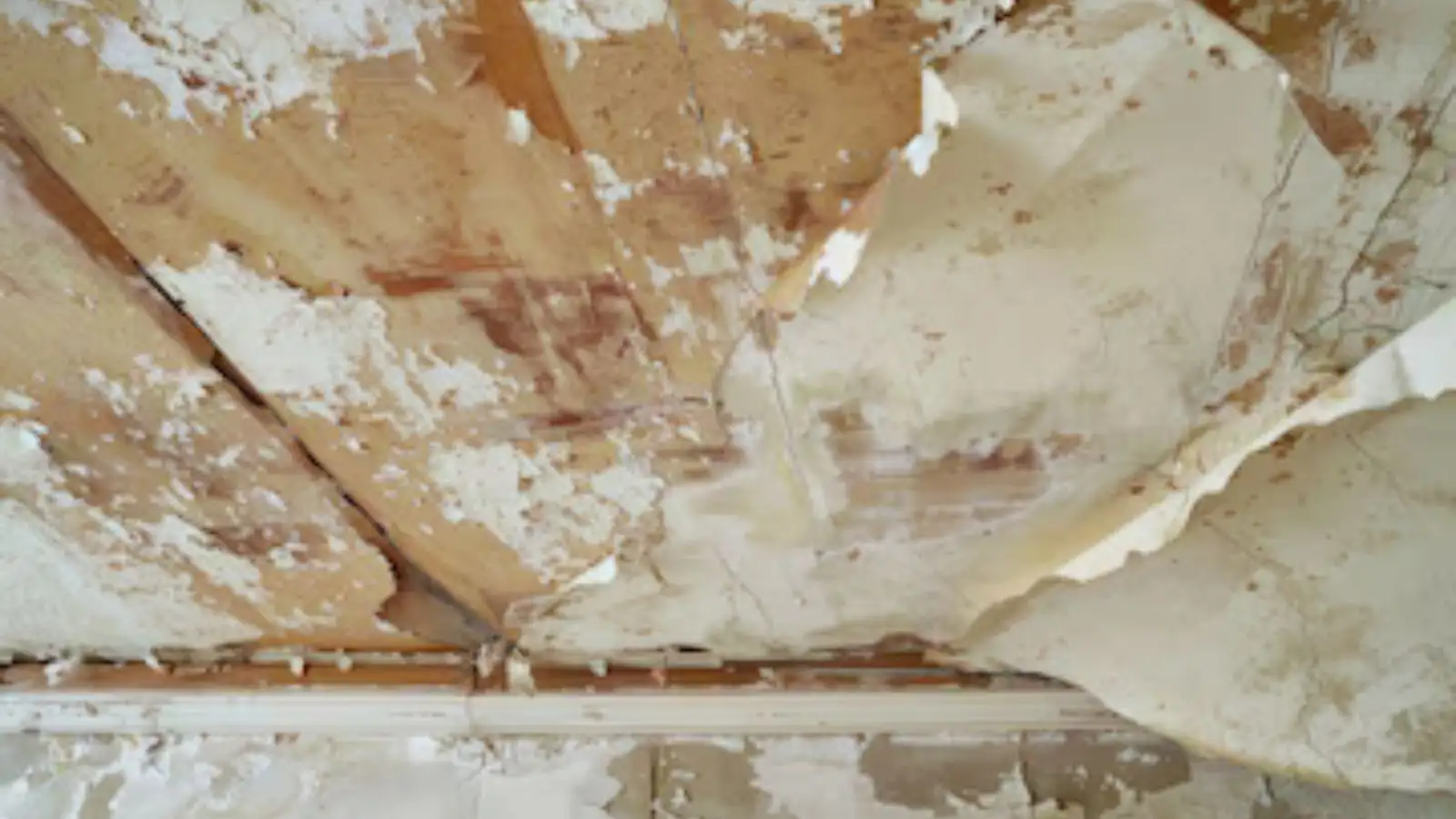
A water stain on the ceiling means something above it is wet or was wet. The mark is only the place where the water finally gave up and soaked through. The leak itself can sit several feet away, along a joist, a pipe, or a sheet of insulation.
Most ceilings are drywall, which is paper-faced gypsum. It drinks water, softens, stains, and then sags. This guide shows how to read each sign, how to guess the source, and when a ceiling stops being a repair job and becomes an emergency.
What each ceiling sign usually tells you
Look at the shape, the color, and the texture before you touch anything. A ceiling gives clues the same way a car gives clues through a dashboard light. The table below pairs the common signs with the usual cause and the sensible next step.
| What you see | What it usually means | Best next step |
|---|---|---|
| Faint tan ring, dry to the touch | An old leak that has stopped, or a slow one that comes and goes | Mark the edge with pencil and check it after the next rain and after the next shower upstairs |
| Brown ring that grows or darkens | A repeating leak, often from a roof or a pipe joint | Find the source this week and photograph the ring weekly |
| Bubbling or peeling paint | Moisture trapped behind the paint film | Press gently with a finger. If it feels soft, plan on cutting that section out |
| Soft spot or slight sag | Drywall has absorbed enough water to lose strength | Keep people and furniture out from under it and call for an inspection |
| Bulge full of water | Water is pooling above the board | Treat as urgent, relieve it safely, and keep clear of lights and wiring |
| Active drip or running water | A live leak from a roof, pipe, or drain | Stop the source if you can and catch the water |
One stain by itself does not prove much. Two or three signs together, such as a growing ring plus a soft spot, point to a live problem. Dry, stable rings with no softness are usually history.
Brown rings, yellow edges, and why stains come back
Water carries dust, tannins from wood framing, and minerals from the insulation as it travels. When it dries, it leaves those behind as a tan or brown ring. If a ring has several lines inside it, like tree rings, the ceiling has been wet and dry more than once.
Painting over the stain does not fix anything. Stain-blocking primer hides the color, but the wet board underneath keeps swelling and the mark returns. Fix the source first, confirm the ceiling is dry with a moisture meter, and only then cover the stain.
Describe the damage to a live dispatcher and get a clear next step.
☎ Call (562) 271-5850Finding the source: roof, pipe, AC line, or bathroom above
Start with timing. A stain that shows up only after rain points to the roof, flashing, a vent boot, or a gutter that spills against the wall. A stain that appears when someone showers, runs the dishwasher, or flushes points to supply lines or drains in the floor above.
Air conditioning is the cause people forget. Many systems drain condensation through a small pipe, and when that line clogs, water backs up into the pan and spills into the ceiling below. If the stain appears in hot weather and the system runs hard, check the drain line and the pan first.
Upstairs bathrooms and second-floor laundry areas leak at shower pans, toilet flanges, tub overflow gaskets, and washer hoses. If the stain sits under a bathroom, ask someone to run the shower while you watch the ceiling from below. A professional using moisture meters and a thermal imaging camera can follow the wet area to its edge, and our water damage repair crews do exactly that before any cutting starts.
When a wet ceiling is an emergency
Some ceilings cannot wait. A bulge, a sag you can see from across the room, water dripping from a light fixture or fan, or a ceiling that is wet near the electrical panel all call for fast action. Water and wiring are a bad mix, and drywall that is full of water can drop without warning.
If water is coming through a light fixture, stay out from under it. Turn off the breaker for that circuit only if the panel is dry and you can reach it safely. If you smell burning, see sparks, or the panel is wet, leave the area and call the utility or 911 before you call anyone else.
Once the electrical risk is handled, our emergency water removal team is on 24/7 dispatch, with same-day response when available. While you wait, move furniture, lift rugs, and place a bucket under the drip.
What you can do tonight while you sort out the source
- Put a bucket or a plastic tub under any drip and set a towel around it.
- Move furniture, electronics, and rugs out from under the wet area.
- Take wide and close-up photos with a date stamp before anything is touched.
- Shut off the main water valve if a pipe is the suspect and the leak will not stop.
- Keep children and pets out of the room if the ceiling is bulging.
- Write down when the stain appeared and what was running at the time.
These steps cost almost nothing and they protect both the room and any later insurance claim. They also help the person who inspects the loss, because a clear timeline narrows the search quickly.
Why the ceiling is rarely the only wet thing
Water that reaches the ceiling has usually passed through insulation, framing, and sometimes a wall cavity first. Insulation holds moisture against the drywall and keeps it wet long after the drip stops. That is why a ceiling that looks fine can still read wet on a meter.
We serve homeowners in Pico Rivera and nearby towns, including Whittier to the east and Downey to the south. In every case the first question is the same. How far does the wet area really extend, and is it still growing?
How insurance usually sees a ceiling leak
Sudden and accidental water damage, such as a pipe that bursts above the ceiling, is often covered. A slow leak that went unnoticed for months often is not. Flood damage is usually excluded and needs separate flood coverage.
Read your policy and ask your insurer how it treats a ceiling leak. Take pictures, keep a claim diary of every conversation, and make temporary repairs that stop more damage. Wait for the adjuster before making permanent repairs.
If a company comes out to look, ask whether its crews work to ANSI/IICRC S500, the published standard for professional water damage restoration, and how they will check the ceiling cavity for moisture.
Pico Rivera note: know which water provider serves your address
The City of Pico Rivera Water Division serves addresses inside the city's own service area, and Pico Water District serves residents outside that area. Check your water bill or the city's find-your-provider tool before you need it. If a ceiling leak turns out to be a pressurized supply line and you cannot reach the home shutoff, you will know exactly which provider to call about the meter.
Frequently asked questions
No. Many stains are old marks from a leak that already stopped. Press the spot gently. If it is dry and the ring has not grown after the next rain or the next upstairs shower, it is probably history. If it feels soft, looks darker, or grows, treat it as live and have it checked.
You can, but the stain will usually come back if the board is still damp or the leak continues. Fix the source first, confirm the drywall is dry with a moisture meter, then prime with a stain-blocking primer and repaint. Painting over wet drywall also traps moisture.
Only if it is clearly full of water, you can stand clear of the spot, and nothing electrical is nearby. A small hole at the lowest point lets the water drain into a bucket and relieves the weight. If the bulge is near a light or fan, leave it and get help.
Watch the timing. Stains that appear only after rain suggest the roof. Stains that appear with showers, flushing, or the dishwasher suggest plumbing above. Stains in hot weather with no rain can point to an AC condensate line that is clogged.
Not really. The steps are the same anywhere in Pico Rivera. Stop the source, catch the water, photograph the damage, and have the area read with a moisture meter. Address matters mainly for water service and for permits if repairs involve electrical or plumbing work.
Water on the floor right now? The dispatch line is open 24/7.
☎ Call (562) 271-5850