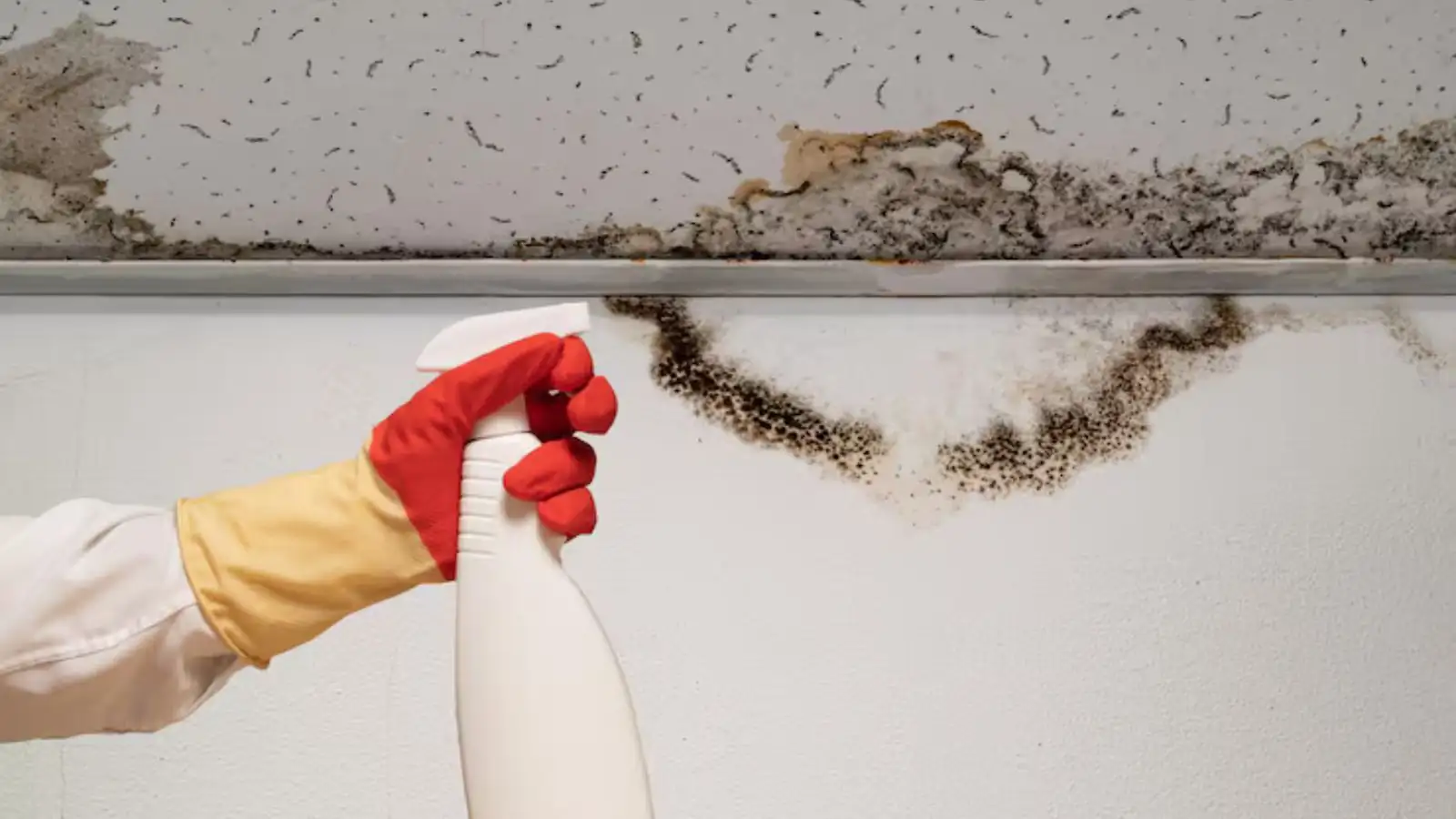
A dark patch on the bathroom ceiling is one of the most common complaints homeowners raise. Bathrooms make steam every day, and steam with nowhere to go settles on the coolest surface in the room, which is often the ceiling.
This guide covers why the ceiling grows mold, how to clean a small painted area safely, when drywall must be removed, and why the fan and the water source get fixed before anything else.
Why bathroom ceilings grow mold
Mold needs moisture and something to feed on. A ceiling gets both from daily showers, because paint, drywall paper and a thin film of dust give growth a place to settle once the surface stays damp.
The cause is usually one of a few things, and the fix depends on which one you have.
- A fan that is weak, clogged or ducted into the attic instead of outdoors
- Showers run with the door shut and the fan off
- A leak from a toilet, tub or supply line in the room above
- A roof or vent leak that shows up in the ceiling after rain
- Paint that has lost its protective sheen and soaks up steam
Steam or leak? Read the clues first
Cleaning works on a steam problem and fails on a leak, so sort out which you have before you pick up a sponge. Use this table as a starting point.
| What you see | What it points to | Sensible next step |
|---|---|---|
| Spots cluster around the fan or in corners | Steam and weak ventilation | Clean the fan cover, check the duct, improve airflow |
| Brown ring that grows after rain | Roof or flashing leak | Have the roof checked, then dry the ceiling |
| Stain grows after someone uses the room above | Plumbing leak above | Stop using that fixture and call a plumber |
| Paint bubbles or the ceiling feels soft | Drywall is wet through | Stop cleaning and call a professional |
| Musty smell with no visible spots | Possible hidden moisture | Have moisture readings taken before anything else |
Describe the damage to a live dispatcher and get a clear next step.
☎ Call (562) 271-5850Fix the fan and the source first
A fan that does not move air outdoors is only a noisy light fixture. Check that the duct runs outside, that it is not crushed or disconnected, and that a tissue held to the grille is pulled in firmly. Run the fan during every shower and keep it going for a while afterward.
If the stain tracks with rain or with the room above, the leak must be repaired before any cleaning, or the ceiling will simply stain again. Mold needs moisture, and no cleaner changes that.
Safe cleaning on a painted ceiling
Surface cleaning is reasonable only for a small area of painted, hard ceiling that is firm to the touch. If any of those conditions is missing, skip ahead to the next section. These steps keep the job conservative.
- Open a window and run the fan before you start
- Wear gloves, eye protection and a mask, since particles fall as you wipe
- Use mild soap and water on a damp cloth, or a cleaner whose label lists mold on painted surfaces, and follow the label
- Never mix cleaning products, because some combinations release harmful fumes
- Wipe a small section at a time and avoid soaking the paint
- Dry the surface with a clean cloth and keep the fan running
- Watch the spot for several weeks
If the spot returns, the moisture is still there. A returning stain is a signal to stop cleaning and look for the cause.
When the drywall has to come out
Drywall is porous, and mold that has grown into the paper face or the gypsum cannot be wiped away. A ceiling that is stained from a leak, sagging, soft or bubbling usually needs cutting out, along with wet insulation above it.
This is not a good weekend project. Cutting a wet ceiling drops dust and insulation on you and spreads material through the house. Professional mold remediation sets up containment barriers and negative air, cuts out the affected section and runs HEPA air scrubbers, and the work should follow ANSI/IICRC S520.
Rebuilding after the ceiling is dry
Once moisture readings show the framing and surrounding drywall are dry, the opening can be closed. New drywall, taping, texture, primer and paint put the room back together. That job falls under water damage repair, and it should start only after the source is fixed and the area is confirmed dry.
Ask whether the repair includes a mold-resistant primer and whether the fan problem was addressed, since a new ceiling above the same weak fan will meet the same steam.
Habits that keep the ceiling dry
Small routines do more than any product. Wipe down wet tile and the tub wall after a shower, hang towels where they can dry, and crack the door once you finish so humid air can leave the room.
Look at the caulk around the tub and the paint near the fan twice a year. A hairline gap or a faint stain caught early is a ten-minute fix, while the same problem ignored for a season can reach the drywall. Keep a dated photo of any spot you are watching so you can tell whether it is growing.
Stop and call a professional if
Cleaning is the wrong tool in these cases, and calling early avoids redoing the work.
- Mold keeps returning after you clean it
- The affected area is large
- It sits in ceiling drywall or other porous material
- You suspect hidden growth above the ceiling or behind the wall
- The ceiling is sagging, soft or stained from a leak
Our crews also work in Montebello and Santa Fe Springs, and the same checklist applies in homes there.
Pico Rivera note: when ceiling and fan work needs a permit
The city Building Division handles building permits in Pico Rivera. Electrical or plumbing work almost always needs a permit, interior demolition likely does, and non-structural cosmetic changes such as repainting usually do not.
Replacing a fan that needs new wiring, or opening a ceiling, can land in the permit column. Before you start, call the Building Division and describe the job, since permit rules vary. If a contractor does the work, ask who is pulling the permit.
Frequently asked questions
For a small painted area, a mild soap solution or a cleaner labeled for the job is a conservative choice. Follow the label, ventilate, wear gloves, eye protection and a mask, and never mix products. Stop if the spot returns or the ceiling is soft.
Mold needs moisture, so a returning spot means the moisture source is still active. It may be weak ventilation, a slow leak above, or damp material hidden behind the paint. Cleaning the surface again will not fix any of those.
No. Stains can come from dirt, old water marks or condensation. Do not guess by color, since only inspection and testing can say what is present. A stain that grows or feels soft is a reason to check for moisture.
Timing helps. A stain that grows after rain suggests the roof, while one that grows after someone uses the room above suggests plumbing. A moisture meter and thermal imaging camera can trace the path when it is not obvious.
Yes, a roof or vent leak can run along framing and show up over a bathroom, sometimes far from the entry point. If you can reach the attic safely, look for damp insulation. Otherwise have the roof and the ceiling both checked.
Water on the floor right now? The dispatch line is open 24/7.
☎ Call (562) 271-5850