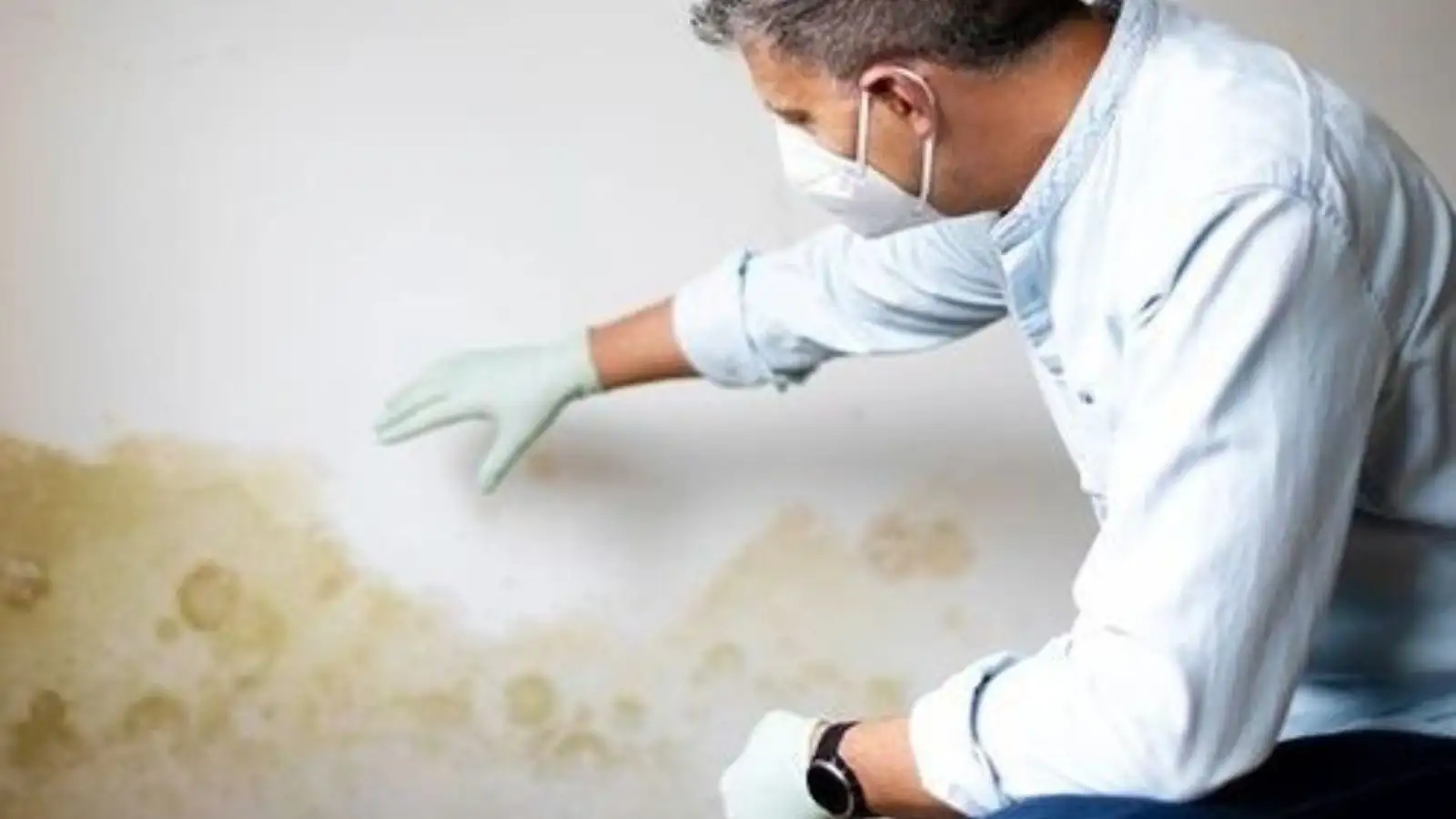
Mold does not appear out of nowhere. It grows where materials stay damp, and a plumbing leak, a roof drip or a clogged drain line can supply that moisture without anyone noticing. This guide explains how water damage turns into mold, which parts of a house hold water the longest, and when a Pico Rivera homeowner should stop guessing and call for help.
The short version is simple. Mold needs moisture, so the water problem comes first and the mold problem second. Cleaning a stain without fixing the leak behind it only sets up the same stain to return.
How moisture turns into mold
Mold spores are a normal part of indoor and outdoor air. They rest on surfaces until a damp, organic material gives them something to feed on. Paper facing on drywall, wood framing, carpet backing and household dust all qualify.
Water is the switch. When a pipe weeps inside a wall or a ceiling stays wet after a roof leak, the material absorbs moisture and stays damp for days. That is the point where a cleanup problem can become a remediation problem.
A spill that is wiped up and dried properly rarely leads anywhere. Trouble starts when water is hidden, ignored or dried only on the surface. A dry surface does not mean the material underneath is dry.
Which materials hold moisture longest
Different building materials give up water at very different speeds. The table shows how common ones behave and what usually happens to them after a leak.
| Material | How it holds water | What usually happens |
|---|---|---|
| Drywall | Paper face and gypsum core soak up water and dry slowly | Often cut out and replaced when wet through |
| Carpet pad | Foam acts like a sponge and traps water under the carpet | Usually removed, while clean-water carpet may be dried |
| Wood framing | Dense, so it releases moisture slowly | Dried in place with air movers and checked with a moisture meter |
| Insulation | Fibers hold water against the wall cavity | Commonly removed where it is wet |
| Wood and laminate flooring | Boards swell and cup as water moves through the seams | Specialty drying if caught early, replacement if not |
| Concrete floor | Releases water slowly and keeps humidity high near the floor | Dried with LGR dehumidifiers |
A moisture meter reads these materials far more reliably than a hand or an eye. A thermal imaging camera can show cool, damp zones behind a surface, though it points to where meters should check rather than giving a final answer.
Describe the damage to a live dispatcher and get a clear next step.
☎ Call (562) 271-5850Why drying quickly matters
The longer wet material sits, the more it can spoil. In the first hours and days after a leak, much of the water is still easy to reach, and extraction and airflow can pull it out. Later it soaks deeper, and a drying job becomes a tear-out job.
Real drying is a controlled process, not a box fan in the corner. Extraction units remove standing water, air movers push dry air across surfaces, and LGR dehumidifiers pull moisture out of the air. Crews take readings on each visit and stop only when materials are dry.
That is why the water side matters in a mold story. Prompt water mitigation aims to get the structure dry before mold has a reason to start, and mold calls often trace back to water that was never fully dried.
Hidden sources that feed mold
Most mold callers never saw a flood. They saw a stain, a bubble in the paint or a smell. These are the sources that show up most often.
- A supply line or drain leaking inside a wall with no puddle to warn you
- An air conditioner condensate line that clogs and drips into a ceiling or closet
- A toilet or tub on an upper floor leaking slowly into a finished ceiling
- A roof or siding leak running down into a closet wall
- A washer hose or valve seeping behind the machine
- A window or door that lets in water during storms
Signs to watch include a musty smell that keeps returning, paint that bubbles or peels, a ceiling stain that grows after rain, and warped baseboards. None of these confirms mold. Only a trained inspection and testing can say what is present, and health questions belong to a physician.
What to do while you arrange help
Stop the water if you can. Close the fixture shutoff or the main valve, and turn off the air conditioner if a condensate line is the culprit. Cut power to wet areas only if the panel is dry and safe to reach.
Open windows, run fans where the air is dry, and keep people and pets out of the affected room. Do not scrub, sand or dry-vacuum suspected growth, since that can spread material through the house. Take dated photos of everything.
Homeowners policies often respond to sudden and accidental water damage, and slow leaks and neglect are often left out. Check your policy and ask your insurer before making permanent repairs.
When to call a professional
Call when the affected area is large, when growth sits in porous material like ceiling drywall or carpet, when you cannot find the source, or when it keeps returning after cleaning. Professional mold remediation uses containment barriers, negative air and HEPA air scrubbers to keep material from spreading, and the work should follow ANSI/IICRC S520.
Ask any company whether its crews work to that standard. A good plan also names the water source and says who will fix it, because remediation without a dry structure is only a pause.
Serving Pico Rivera and nearby towns
Our crews dispatch around the clock and also work in Whittier to the east and Downey to the south. Scope and price are explained before work starts, and the real number comes after someone has seen the loss.
Pico Rivera note: know your water provider before a leak starts
Addresses inside the city's own service area are served by the City of Pico Rivera Water Division, while Pico Water District serves residents outside that area. Your water bill shows which one is yours.
That matters during a leak because the provider is who you ask about the meter and the supply on the street side. Find and test your main shutoff valve now, and tape the provider's name beside it. If water is running before the meter, ask the provider where its responsibility ends and yours begins.
Frequently asked questions
There is no safe timer to count on, because it depends on the material, how wet it is and the air in the room. The practical answer is to start drying quickly, in the first hours and days, and to confirm with a moisture meter that materials are truly dry.
Paint hides the color but not the moisture. If the leak is still active or the material is still damp, the stain tends to come back through the paint. Find and fix the source first, confirm the area is dry, then repair and repaint.
Testing can document what is present and later confirm that cleanup worked, but it never replaces fixing the water source. Ask whether the plan follows ANSI/IICRC S520, and note that independent clearance testing is often done by someone other than the company that did the removal.
Health questions belong to a physician, and we do not diagnose anything. What we can say is that visible growth signals a moisture problem that should be found and fixed. Large or hidden growth should go to a professional rather than a scrub brush.
Stop the water at the fixture or main valve first. If water is running before the meter, call your water provider, which is the City of Pico Rivera Water Division or Pico Water District depending on your address. If water is inside the home, call the 24/7 dispatch line.
Water on the floor right now? The dispatch line is open 24/7.
☎ Call (562) 271-5850