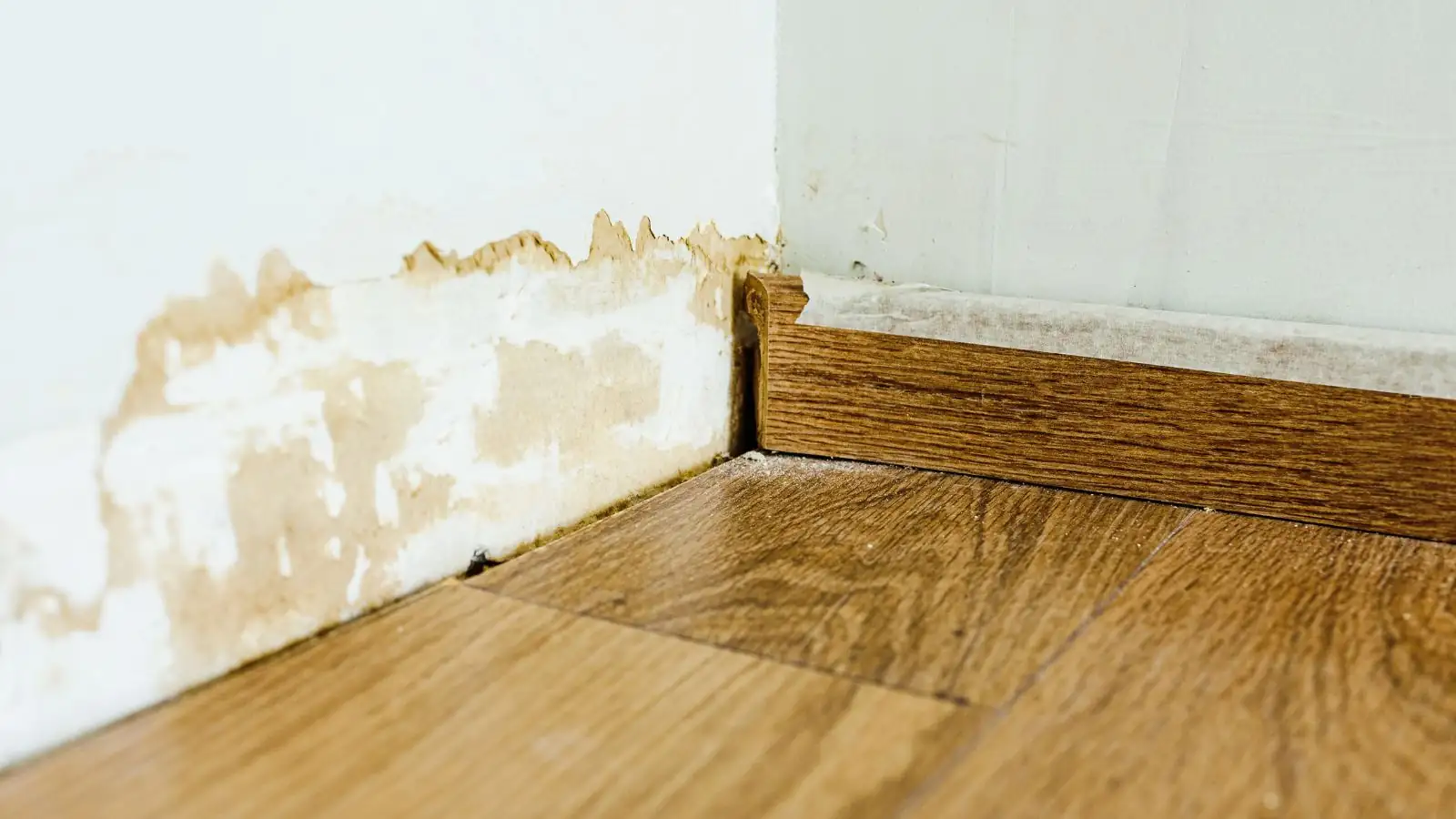
With a burst supply line, a failed water heater, or a washing machine hose, the repair path is the same. You stop the water, remove what is standing, dry what is wet, clean what is dirty, and only then rebuild. Doing these in the wrong order is how people end up painting over wet walls.
This guide walks through the whole house order of operations, gives you a table for sorting materials into dry or replace, and explains where a restoration company earns its keep.
Step one: stop the source
Nothing else matters until the water stops. Shut off the main water valve for a supply line, a water heater, or a washing machine hose. Turn off the appliance and unplug it only if the floor around the plug is dry.
If the water came from the roof, a tarp or plastic sheet over the opening buys time. If it came from a drain or toilet backup, stay out of the water. Sewage-contaminated water is a different job and needs protective gear.
Step two: make the area safe
Water and electricity do not mix. If the water is near outlets, a power strip, or the electrical panel, do not stand in it. Cut power to the wet area at the breaker only if the panel is dry and you can reach it without stepping through water.
If you smell gas, see sparks, or the panel is wet, leave the house and call the utility or 911 before you call a restoration company. Lift valuables off the floor and keep children and pets out of the affected rooms.
Describe the damage to a live dispatcher and get a clear next step.
☎ Call (562) 271-5850Step three: remove the water
Standing water comes out first, because every hour it sits it soaks deeper into drywall, flooring, and cabinet bases. A wet-dry vacuum handles a puddle. A flooded room needs an extraction unit that pulls water out of carpet and pad, which is why many homeowners call for help at this stage.
Our water mitigation team handles this stage with truck-mounted or portable extraction units. We also pull up wet carpet pad and remove baseboards so water does not stay hidden behind the walls.
Step four: dry the structure
Drying is the step most people underestimate. Surfaces can look dry while framing, subfloor, and wall cavities stay wet. Professionals set air movers to push air across surfaces and LGR dehumidifiers to pull moisture out of the air, then track readings with moisture meters.
A home fan and a window do not match that. Without measured drying, hidden moisture can warp wood and give mold what it needs to grow. Drying is finished when readings match a dry reference, not when the room feels fine.
Step five: clean and sanitize
The category of the water decides how aggressive the cleanup has to be. Category 1 water, from a clean supply line, is the least risky. Category 2 water, from a dishwasher or washing machine, carries contaminants. Category 3 water, from sewage or outside flooding, is grossly contaminated, and porous materials it touches usually go.
Our water damage cleanup crews wipe, treat, and HEPA-vacuum surfaces and use air scrubbers when airborne particles are a concern. Throw away contaminated, porous items such as soft furnishings that cannot be cleaned.
What usually dries and what usually goes
Materials react very differently to water. This triage table shows the usual outcome for common building materials, though a meter reading and the water category can change the answer.
| Material | Usually dried and kept | Usually replaced |
|---|---|---|
| Drywall | Clean water, brief contact, and firm board | Soaked, sagging, or touched by Category 3 water |
| Carpet | Clean water, dried and cleaned in place | Contaminated water or long soaking |
| Carpet pad | Rarely worth saving | Almost always replaced, since it is cheap and holds moisture |
| Hardwood floor | Light cupping that flattens during drying | Severe cupping, buckling, or a wet subfloor |
| Insulation | Dry fiberglass above the wet zone | Wet, matted, or contaminated insulation |
| Cabinets | Solid wood or plywood boxes dried quickly | Particleboard that has swollen |
| Baseboards | Painted solid wood, removed and dried | Swollen MDF |
Treat the table as a starting point. A meter and a trained eye settle the borderline cases.
Step six: repair and rebuild
Once readings confirm everything is dry, rebuilding begins. That means new drywall, taping and texture, paint, flooring, and trim. Rushing this step means trapping moisture behind new surfaces.
If the water was extensive, the rebuild may be bigger than the cleanup. We serve Pico Rivera and nearby towns, including Whittier and Santa Fe Springs, and the order of work is the same everywhere.
When a company is needed
- The water is more than a small puddle or covers more than one room.
- The water came from a drain, toilet, sewer line, or outside flooding.
- Water got into walls, under flooring, or into a ceiling.
- A musty smell appears after you have dried the surface.
- You cannot get readings that confirm the structure is dry.
- Your insurer needs a record of the drying and the damage.
Any one of these tips the job toward professional help. If two or more apply, call sooner rather than later. The longer wet material sits, the more it can spoil.
Insurance and documentation
A homeowners policy generally covers sudden and accidental water damage and usually excludes flood. Gradual leaks often fall outside coverage. Read your policy and ask your insurer how it handles water damage.
Photograph everything before you clean. Keep receipts and a log of calls with the insurer. Make temporary repairs only, and wait for the adjuster before permanent ones.
A useful question for any company you call is whether its crews work to ANSI/IICRC S500, the published standard for professional water damage restoration, which is where the drying and documentation expectations come from.
Pico Rivera note: living at the base of Whittier Narrows Dam
The whole city sits inside the inundation area of Whittier Narrows Dam, and a federal safety project is planned with dates that the city says keep changing. Most homeowners policies exclude flood, so check the FEMA Flood Map Service Center for your own address and ask your agent whether separate flood coverage makes sense. Keep an eye on the Army Corps of Engineers project page for current dates.
Frequently asked questions
Stop the source by shutting off the main valve or the appliance. Then make the area safe by cutting power only if the panel is dry. After that, lift valuables, remove standing water, and begin drying. Call a restoration company if the water is large or contaminated.
Small spills on hard surfaces, yes. Anything that reached drywall, subfloor, or insulation is harder. Without meters and dehumidifiers you cannot tell whether the structure is dry, and hidden moisture can cause damage later.
Category 1 is clean water from a supply line. Category 2 carries some contaminants, such as washing machine or dishwasher water. Category 3 is sewage or outside flood water. The category affects what can be dried and what must be thrown out.
Moisture meters compare wet areas to a dry reference reading from the same material. When the numbers match, rebuilding can begin. Looking dry is not enough, so ask for the readings.
It is worth a conversation with your agent. Homeowners policies generally do not cover flood, and the whole city lies within the dam's inundation area. Check the FEMA Flood Map Service Center for your address and ask what a separate flood policy would include.
Water on the floor right now? The dispatch line is open 24/7.
☎ Call (562) 271-5850