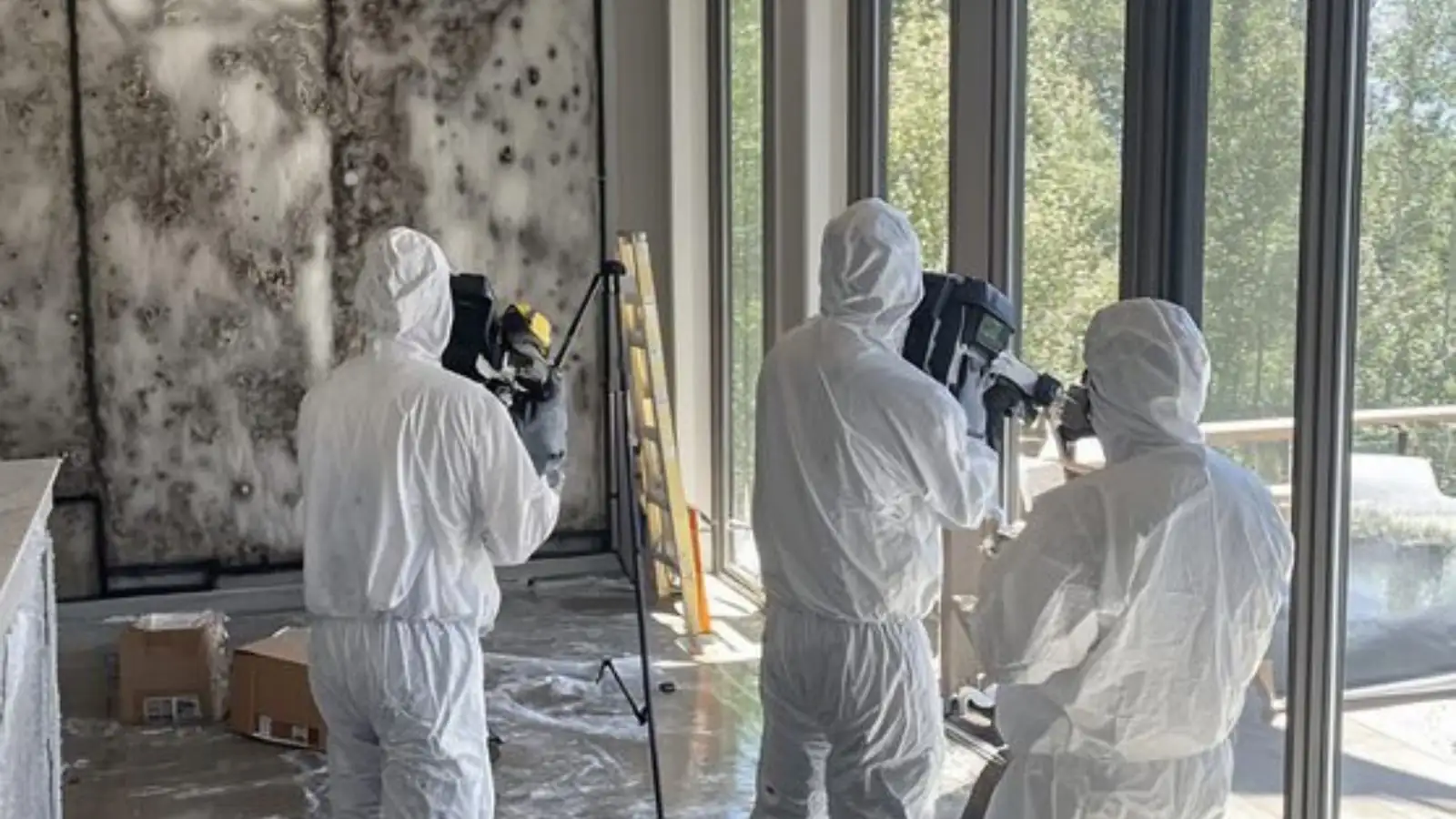
The first question most people ask about mold is what it will cost. A fair answer cannot come from a blog post or a phone call, because the price follows the scope, and scope follows what is actually behind the wall. This page explains the factors that move the cost of mold remediation in Pico Rivera and gives you a checklist for reading any quote.
We do not publish figures here on purpose. A number without context sets a false expectation, and honest pricing starts with someone seeing the loss.
Why a single number does not exist
Two homes with the same stain can need very different work. One may have a small area on a hard, sealed surface. The other may have a ceiling that is wet above the paint, wet insulation and a hidden leak.
The visible spot rarely tells the whole story. That is why a real quote starts with moisture readings, a look at the source and a written scope, and why a price that arrives before any of that deserves a question.
The main cost drivers
Most of the difference between one job and another comes from a handful of factors. Each one changes how much labor, equipment and material the plan needs.
Size of the affected area
A small patch and several rooms call for very different amounts of labor, containment and cleaning.
Type of material
Hard, sealed surfaces can often be cleaned. Porous materials like drywall, insulation and carpet pad often have to be removed.
Access
Attics, tight closets and finished ceilings take more time to reach, protect and reopen.
Containment and negative air
Barriers, HEPA air scrubbers and negative air add equipment and setup, and they protect the rest of the house.
Testing and clearance
Confirming the result takes a separate step, often with an independent tester.
Repair afterward
Rebuilding drywall, paint, flooring and trim is a different job from removal.
Describe the damage to a live dispatcher and get a clear next step.
☎ Call (562) 271-5850Cost factors and what they change
This table connects each factor to the change it makes in the work. Use it to understand why two quotes can differ.
| Cost factor | What it changes in the scope |
|---|---|
| Affected area | How many rooms get containment, cleaning and material removal |
| Material type | Whether surfaces are cleaned or cut out and replaced |
| Hidden moisture | Whether walls or ceilings must be opened to find the full extent |
| Access and height | Setup time, protection of finished surfaces and labor |
| Containment and negative air | Equipment count, days on site and air filtration |
| Testing and clearance | Extra visits, sampling and a written result |
| Water source repair | A separate plumbing or roofing job done by the right trade |
| Rebuild and finish | Drywall, texture, paint and flooring after the area is dry |
Containment, negative air and testing
Containment is what keeps growth from drifting into clean rooms while material is removed. Barriers seal the work area, negative air pulls air toward a filter, and HEPA air scrubbers clean it before it leaves. These steps add to the price, and they are also what separate a controlled job from a messy one.
Testing and clearance follow the work. Many homeowners prefer that confirmation come from an independent party, and lenders sometimes ask for it. Ask whether testing is in the quote, separate from it or handled by someone else, and ask whether the plan follows ANSI/IICRC S520.
The water source is a separate cost
Mold needs moisture, so the leak, the condensate line or the roof opening has to be fixed or the work repeats. That repair belongs to a plumber, roofer or HVAC technician, and it is priced apart from remediation.
If the structure is still wet, drying comes first. That means extraction units, air movers and LGR dehumidifiers running until moisture meter readings show the materials are dry, and it may be quoted as its own line.
Repairs after remediation
Remediation removes the affected material, and it does not put the room back together. New drywall, taping, texture, paint, flooring and trim are separate work. A quote that says nothing about rebuilding may be leaving that job to you.
Ask whether the company offers the rebuild through water damage repair or expects you to hire another trade, and ask what the finished surface will look like when the work ends.
A quote checklist
Hold every bid to the same list. A good one answers these items in writing before work begins.
- The scope, room by room, with materials to be removed and cleaned
- The containment and negative air plan
- Whether testing and clearance are included
- What happens to the price if hidden damage turns up
- Who repairs the water source and who rebuilds afterward
- How payment and scope changes are handled
If a bid cannot answer these, ask for a revision. Scope and price should be explained before work starts, and the real number comes after the loss is seen.
What to bring to the first visit
A little preparation makes the first visit more useful and the scope more accurate. Gather dated photos of the stain and of any earlier leak, plus any past repair records and the name of your water provider.
Tell the crew what you have already tried, including cleaning products and patch work. Say whether a lender or buyer is requiring the work, since that can add a testing step to the plan.
Insurance and cost
Sudden and accidental water damage is often covered by homeowners insurance, while gradual leaks and neglect often are not. Whether a given mold claim is covered depends on your policy, so ask your insurer.
Take photos, keep records of every cost and keep a claim diary. Make only temporary repairs to prevent more damage until the adjuster has seen the loss.
Safety steps while you wait for a quote
Cost conversations take a few days, and mold should not be disturbed in the meantime.
- Do not scrub, sand or wipe the affected area dry, because that spreads material into the room.
- Do not run fans toward the area or the air handler through it.
- Keep children and pets out of the room and close the door.
- Fix or shut off the water source first, since mold needs moisture.
- Take photos of the area and note where the leak was.
Keeping the scope small
The cheapest mold job is the one that never grows. Fixing leaks early and getting wet material dried quickly through mold remediation or earlier drying work keeps the scope from spreading. We also work in Whittier and Santa Fe Springs.
Pico Rivera note: why the dam matters to your scope
Whittier Narrows Dam was built in 1957, and the city says the entire city lies inside its inundation area. A federal project to upgrade the dam is planned, and the city warns that its dates keep changing.
That is a flood question and a mold-cost question at once. Floodwater is usually excluded from homeowners policies, so check whether your home has separate flood coverage before a loss. Floodwater can also be contaminated, which widens a scope, so keep photos and ask your insurer what applies.
Frequently asked questions
We can explain the factors on the phone, but the real number comes after someone sees the loss. The area, materials, access and source all change the plan. Any firm number given without a visit is a guess.
Sometimes, and sometimes it is separate. Ask directly. Many homeowners prefer an independent tester for clearance, and the quote should say who does it and what the result looks like.
They often cover different scopes. One may include containment, negative air and testing while the other leaves them out. Compare line by line, not by total.
Usually not. The water source is repaired by the right trade and priced separately. Without that fix, the moisture that fed the growth stays in place.
It can change the scope. Floodwater can carry contamination that widens the work, and flood damage is usually excluded from homeowners policies. Check the FEMA Flood Map Service Center for your address and ask your insurer what applies.
Water on the floor right now? The dispatch line is open 24/7.
☎ Call (562) 271-5850