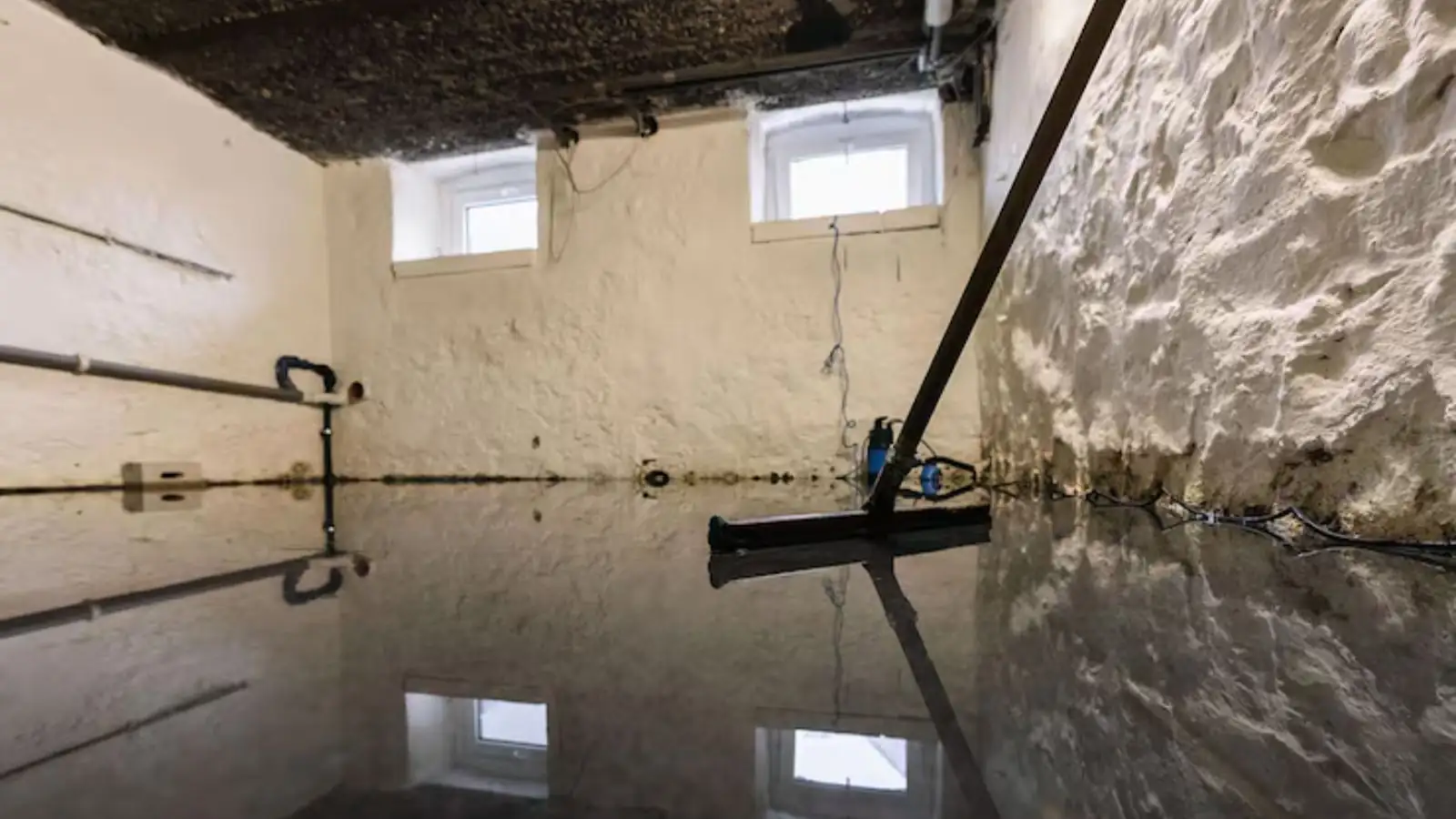
Water that collects below the main floor is harder to deal with than a spill on a kitchen tile. It pools in low spots, soaks into concrete and wall bases, and has nowhere to go until someone pumps it out. A flood damage restoration crew handles the pumping, drying and cleaning as one coordinated job.
This guide explains how below-grade cleanup works, what a proper service should include and where cleanup ends and waterproofing begins.
Who this guide is for
Not every house has a basement, and this page does not assume yours does. It applies if your home has a basement, a garage-level room, or a raised-floor crawl space where water can settle. If your water is on a slab or main floor, the same drying principles apply, but the pumping steps may not.
If you are unsure what sits under your floor, look for a hatch, a stairwell down or a vent grate along the foundation. Tell the dispatcher what you found so the crew brings the right extraction equipment.
Safety comes before the pump
Low rooms often hold the panel, the water heater, a furnace or a laundry setup, which means water and electricity can meet. If water is near outlets or equipment, stay out and do not step into it. Turn off power only if the panel is dry and safe to reach, and call the utility or 911 about electrical or gas risks before you call the restoration line.
Water in a stairwell can also hide steps, tools and debris. Keep people and pets upstairs. If the water came back up through a floor drain, treat it as sewage and keep everyone out.
Describe the damage to a live dispatcher and get a clear next step.
☎ Call (562) 271-5850Pumping and extraction: how water gets out
Crews start with extraction units and submersible pumps that move standing water out of the space. When the ground outside is also saturated, water is often lowered in stages and not all at once, so the structure is not stressed. The goal is to remove the bulk quickly and then deal with what remains in the materials.
Once the standing water is gone, extraction wands pull water from carpet, pad and low drywall. If you need water removed fast and the main issue is volume, emergency water removal is the service that matches that first step.
Why speed matters below ground
Basements and low rooms dry slowly. There is less airflow, concrete holds moisture and cool, still air does not carry water away. The longer wet material sits, the more it can spoil.
Wet cardboard boxes, wood trim and drywall bottoms are usually the first things to go bad. Acting in the first hours and days gives a crew the best chance to dry and keep more of your finishes. Delay widens the area that needs to be removed.
Drying a below-grade space
After extraction, moisture meters and thermal imaging cameras check walls, floor edges and stored items. Air movers push dry air across wet surfaces. LGR dehumidifiers pull moisture out of the room, which matters most in a closed lower space with little natural airflow.
Crews return to read the meters again, and equipment stays until the readings come down. Drying takes days. If a company promises a one-visit fix for a soaked lower level, ask how they will prove the materials are dry.
A quick decision table for common situations
Use this as a starting point when the water source is not obvious. The right first step depends on where the water came from.
| Situation | Likely source | Sensible first step |
|---|---|---|
| Clear water spreading from one fixture or line | Burst supply pipe, water heater or appliance hose | Close the main water valve, then call for extraction |
| Water entering along the wall or floor edge after heavy rain | Surface water or saturated ground outside | Keep power off in the wet area, photograph, and call for pumping |
| Dirty water rising from a floor drain | Sewer or drain backup | Stay out, keep others away, and call for sewage-rated cleanup |
| Damp walls and musty smell but no standing water | Leak behind a wall or earlier flood that dried badly | Request moisture readings before deciding what to open |
A table cannot diagnose your home. A technician with a moisture meter can confirm the source and tell you which row you are really in.
What a basement flood cleanup service should include
Ask for the scope in writing. A solid service covers more than pumping, and each item below should be named so you can compare quotes fairly.
- Water extraction from floors, carpet and low walls
- Moisture mapping with meters and thermal imaging
- Air movers and LGR dehumidifiers with monitoring visits
- Removal of wet materials that cannot be dried, such as soaked pad and drywall bottoms
- Cleaning and sanitizing of hard surfaces
- Photos and drying logs you can share with your insurer
- A clear note on what is mitigation and what is rebuilding
Restoration is not waterproofing
Cleanup and drying return your space to a dry condition. They do not stop water from coming back. Waterproofing and foundation work address how water gets in, and that is a separate trade with its own contractors.
If water entered more than once, ask the crew what they saw and where moisture readings were highest. Then bring that information to a waterproofing or drainage contractor. Fixing the source also matters for mold, because mold needs moisture to grow.
Insurance and cost, in general terms
Homeowners policies do not cover flood damage, and flood needs separate flood coverage. Other kinds of water damage, such as a sudden pipe failure, may be covered, so check your policy and ask your insurer. Photograph everything, keep receipts, keep a claim diary, and do not make permanent repairs until the adjuster has seen the damage.
For a low room, price tracks how deep the water got, what it soaked, how long equipment runs and what has to be rebuilt. The real number comes after someone sees the space, and scope and price are explained before work starts. We also serve homes near the city line, including water damage restoration in Whittier and Montebello.
When you compare cleanup services, ask whether the crews work to ANSI/IICRC S500, the published standard for professional water damage restoration, and how they will confirm that the lower level is dry.
Pico Rivera note: street drainage spots worth knowing
The city's General Plan describes a county assessment that found localized flooding and deficient drainage in a few places. They include the north side of Washington Street between Rosemead and Paramount, Olympic north of Acacia Avenue, and Terradell Street and Pico Vista Road. Storm drains carry runoff to the Rio Hondo and San Gabriel River channels.
If you live near one of those spots, watch how water behaves at the curb during a storm and take photos of any pooling. That record helps a contractor judge whether water came from the street or from inside the house. For your own address, check the FEMA Flood Map Service Center, because the city-wide picture does not replace a lookup for your property.
Frequently asked questions
Only if the power is off, the water is clean and you are not stepping into it near electrical equipment. Dirty or fast-moving water is better left to a crew. Pumping too quickly can also stress walls when the ground outside is soaked.
Drying takes days, and the time depends on the water category, the materials and how much airflow the space has. Crews check moisture readings on return visits and keep equipment running until the materials read dry.
No. Cleanup and drying restore the space but do not change how water gets in. Waterproofing and drainage work address that, and they are a separate scope. A crew can share what they found so your next contractor starts informed.
Photograph them first, then move items to a dry area if the water was clean. Cardboard, fabric and paper often cannot be saved. Freezing wet photos and documents can buy time. Keep a list of anything discarded for your records.
The city's General Plan notes a few drainage trouble spots, but it cannot tell you about your own address. Photograph curb pooling during storms and look up your property in the FEMA Flood Map Service Center. Share both with any contractor you hire.
Water on the floor right now? The dispatch line is open 24/7.
☎ Call (562) 271-5850